Field Notes
Practical guidance from our crews on running shower trailers anywhere in Nevada.
- Planning Shower Trailers for Nevada Construction and Mining Crews
- Shower Trailers for Nevada Events and Festivals
- Emergency and Disaster Response Showers Across Nevada
- How to Choose and Prepare a Shower Trailer Site in Nevada
Planning Shower Trailers for Nevada Construction and Mining Crews
Crew counts, hauled water, generator power, waste water, and site access on remote Nevada job sites, laid out in the order you will actually face them.
A hot shower at the end of a shift is not a perk on a Nevada job site. It is part of keeping people healthy, keeping them productive, and keeping them on the crew through a long build. We have been setting shower trailers on projects around this state for years, from solar fields and warehouse pads outside Boulder City to mine camps in the high desert north of Elko, and the same handful of planning decisions come up on almost every job. This guide walks through them in roughly the order you will face them, so you can get the logistics settled before the first crew rolls in.
Why showers change how a Nevada crew performs
Two things drive the need here, and both are specific to this state. The first is heat. Summer in the Las Vegas valley, Laughlin, Mesquite, and Pahrump runs well past one hundred degrees for weeks at a time, and a worker who has been in long sleeves and a hard hat since sunrise is carrying salt, sunscreen, and grit home in his truck. The second is dust. Nevada soil is fine and it travels. On a grading job, a trenching job, or anywhere near a crusher, your people finish the day coated in it. Washing that off before the drive home is the difference between a crew that shows up fresh and a crew that wears down by week three.
On mining and remote energy work there is a third factor, which is distance. If your nearest town is forty minutes of gravel away, sending people back to a motel in Elko or Winnemucca to clean up is not a plan, it is a daily cost in fuel, windshield time, and turnover. Camps with real shower facilities hold onto skilled hands. Camps without them do not.
Start with your peak, not your headcount
The number that matters is not how many people are on the project. It is how many of them want a shower inside the same hour. A hundred person crew that releases in one wave at three thirty in the afternoon has a very different requirement than a hundred person crew running two shifts with a staggered release.
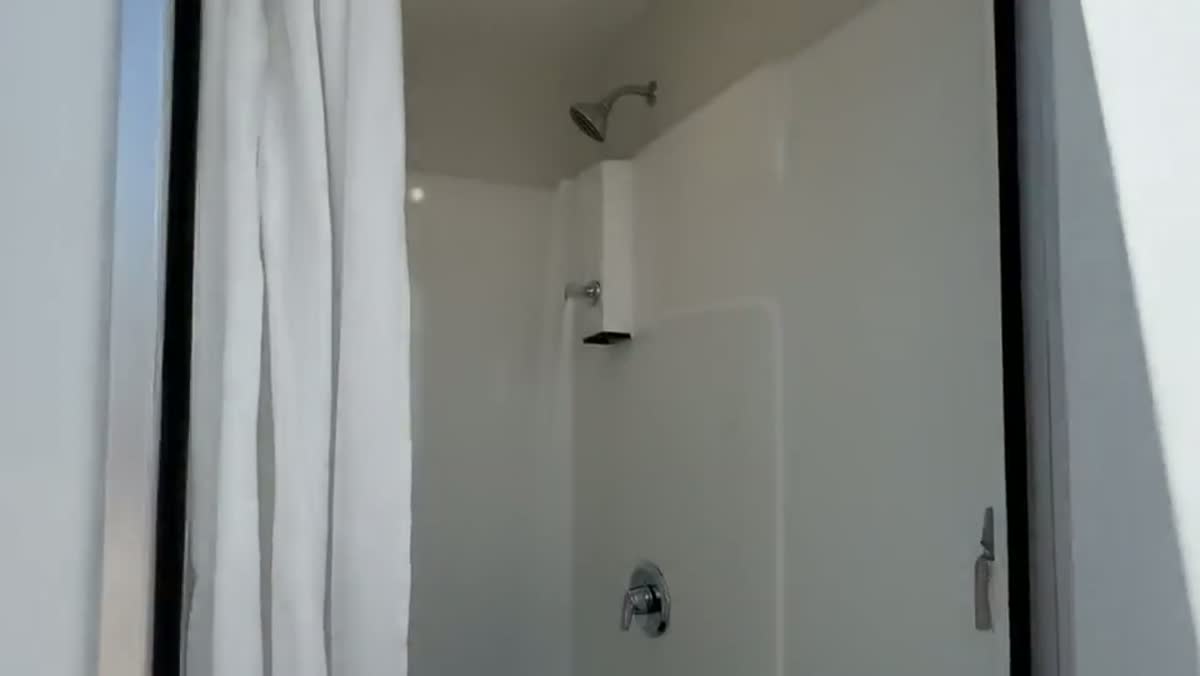
Before you size anything, get clear on three things. How many people per shift. How many shifts overlap. Whether supervision is willing to stagger the release by trade or by area so the line moves. Most of the projects we serve solve throughput with a combination of stall count and a simple posted schedule, and the schedule is free. A luxury shower trailer with private individual stalls lets several people wash at once without anyone waiting in an open bay, and on demand hot water means the last person in line gets the same shower as the first.
Water: plumbed, hauled, or tanked
There are three ways water reaches a shower trailer in Nevada, and which one you use depends entirely on where the site sits.
- Plumbed to a hookup. On infill work in Las Vegas, Henderson, North Las Vegas, Sparks, and Carson City there is often a meter or a temporary construction service within reach. This is the simplest arrangement. You need a potable rated hose run and protection where it crosses traffic.
- Hauled water. On mine sites, solar builds, and pipeline work with no service at all, a potable water hauler fills the trailer on a set rotation. The key is agreeing on the rotation before the crew arrives rather than reacting when the tank runs low on a Friday afternoon.
- Self contained operation. The trailer runs off its own onboard supply and gets refilled on a schedule. This is the common setup on short duration work and on anything in the outlying areas where nothing is close.
Usage is always higher than a first time customer expects, especially in July. People take longer showers when they are overheated. Build the fill schedule with margin and adjust after the first week, when you have real numbers from your own crew instead of an estimate.
Power at a site with no grid
A shower trailer needs steady, clean power for the water heating system, the pumps, the lights, and the climate control. In town, that usually means a temporary service or a spider box you already have on site. Out in the desert it means a generator, and generator planning is where jobs get into trouble.
Three rules we give every customer. Size the generator for the trailer plus whatever else you plan to hang off it, not just for the trailer alone. Keep it fueled on a schedule rather than on a guess, because a generator that dies at two in the morning means a cold trailer at five. And put the generator far enough from the trailer that the noise does not carry into the stalls, with the exhaust pointed away from the entry door.
Waste water has to go somewhere legal
Gray water from showers and sinks collects in a holding tank and gets pumped by a licensed hauler. You cannot let it run out onto the ground, and no county in Nevada is going to look the other way if you do. On a mine site the environmental officer will be the first person to ask you how the trailer handles waste, so have the answer ready in your submittal.
The practical planning question is pump out frequency. That depends on crew size, shower length, and how many of your people are also using the sinks through the day. Same advice as with fill water, set a conservative schedule for the first two weeks, then tune it once you know your crew.
Dust, wind, and heat management
Placement decides how clean the interior stays. Put the trailer upwind of the crusher, the haul road, and the batch plant if you have any choice at all. A gravel or compacted pad beats bare dirt, because bare dirt turns into mud right at the door step the moment anyone is dripping. A simple entry mat and a bench or hook area outside for boots keeps most of the site out of the stalls.
Winter on the northern and high desert jobs
People who only work the southern half of the state forget how cold the rest of Nevada gets. Reno, Sparks, Carson City, and especially Elko run hard freezes through the winter, and the high elevation mine sites can drop below freezing overnight well outside of what anyone thinks of as winter.
Cold weather operation comes down to keeping the unit powered and heated overnight rather than shutting everything down at the end of shift, protecting the water supply line where it runs outside the trailer, and keeping the pad clear so nobody is stepping onto ice at the door. If your project runs through winter in the north, say so when you book, because the setup is different from a summer job in Laughlin.
Access, escorts, and site rules
Our service truck has to reach the trailer and turn around. That sounds obvious until a laydown yard fills up in month two and the only approach is blocked by material. Think about the service path when you pick the spot, not just about where the trailer looks tidy on the site plan.
Mine sites add a second layer. Orientation, badging, and escort requirements apply to every service visit, not just the delivery, so tell us about them during planning and we will build the time into the schedule.
What to have ready before you call
- Site address or coordinates, and how a truck actually gets in.
- Crew count per shift and your realistic peak hour.
- Project duration, including whether it runs through summer, winter, or both.
- Water source: hookup available, hauled, or fully self contained.
- Power source: temporary service, existing generator, or nothing at all.
- Ground conditions at the spot you have in mind.
- Any ADA requirement, which we can plan for with an accessible unit.
- Site access requirements such as orientation, escorts, or restricted delivery windows.
Bring those eight answers and we can put a workable plan together in one conversation. We serve the whole state, so whether the job is inside the Las Vegas valley or four hours out on a gravel road, the planning conversation is the same. Get the water, the power, the waste, and the access settled up front, and the showers become the part of the project nobody has to think about again.
Shower Trailers for Nevada Events and Festivals
Guest counts, placement, servicing a multi day run, and surviving desert heat at festivals, rodeos, race weekends, and film shoots across Nevada.
Nevada hosts a strange and wonderful mix of gatherings. Music festivals on open playa, rodeos and county fairs, desert race weekends, film shoots in the rocks outside Las Vegas, corporate build outs in the parking lots of the Strip resorts, and every kind of private event on ranch land where the nearest permanent building is a barn. What they have in common is that people stay longer than a few hours, the sun is unforgiving, and there is nowhere to clean up. That is the gap a shower trailer fills. Here is how we plan them for events across this state.
Decide early whether showers are a service or an amenity
The first question we ask an event producer is who the showers are actually for. The answer changes everything downstream.
If they are for staff, crew, vendors, and performers, you are serving a known headcount with a predictable rhythm. Crew showers cluster in the early morning before doors and late at night after teardown. Placement can be back of house, out of public view, and you can control access with credentials.
If they are for guests at a multi day camping event, you are serving a much larger number of people whose usage spikes hard in the morning and again in the early evening, and the unit becomes part of the guest experience. That means placement, lighting, signage, and the walk from the camping area all matter as much as the trailer itself.
Guest counts and the throughput math
Total attendance is a poor planning number on its own. What we need is how many people will be on site overnight, what percentage of them will want a shower on a given morning, and how wide the morning window is.
A few patterns we see consistently at Nevada events. Camping guests shower far more often in July and August than in October, because the heat drives it. At a three day event, day two morning is almost always the heaviest demand, since day one arrivals have not been out in the dust long enough yet. And a posted schedule with time blocks by camp area smooths a line better than adding capacity does, at a fraction of the cost.
Private individual stalls are what make an event unit work socially. Guests at a wedding on a ranch outside Carson City, or crew on a film shoot in Red Rock, are not going to use an open bay setup. They will use a clean, private, climate controlled stall with a real sink and vanity, and they will tell you about it afterward. That is the whole reason to bring a luxury unit rather than something industrial.
Placement is the decision you cannot undo
Once a trailer is set, leveled, and connected in the middle of a built out event, moving it is a real disruption. Get placement right on the site plan.
- Level ground, firm surface. Asphalt and compacted gravel are ideal. Soft sand and loose playa need planning and matting.
- Service truck access that survives the build. The path that is wide open during load in often disappears once fencing, staging, and vendor booths go up. Mark and protect it.
- Away from the main sound source. Nobody enjoys a shower fifty feet from a subwoofer stack.
- Near the camping area but not inside it. Close enough for a short walk, far enough that the queue does not run through somebody's tent.
- Lit and visible at night. Desert dark is genuinely dark. Path lighting from the camping area to the showers is a safety item, not a nicety.
- Drainage in mind. Foot traffic around a shower entry gets wet. Gravel or matting at the door keeps mud out of the stalls.
Servicing a multi day event without interrupting it
A one day event is simple. Anything running two days or longer needs a servicing plan that fits between the peaks rather than colliding with them.
In practice that means a fill and pump window in the late morning after the breakfast rush and before the afternoon, and often a second one late at night. We work that around your run of show, which is why we ask for it during planning. If your schedule has a hard blackout window, for instance during a ceremony, a headline set, or a live shoot, tell us and we plan around it.
Consumables are the other piece. Towels, if you are supplying them, plus soap and paper products get consumed faster than most producers estimate on day two and three. Decide who is responsible for restocking and how often, and put a name on it. Events where nobody owns restocking are the events where the complaints start on Saturday afternoon.
Desert heat changes everything
An event in the Las Vegas valley, Laughlin, Mesquite, or Pahrump in summer is a different operation from the same event in the spring. Heat pushes guests to shower more, it pushes them to shower in the hottest part of the afternoon just to cool off, and it makes the walk to the facilities part of the experience.
Three things help. Put shade over the queue area if the unit sits in open sun, because a line in one hundred and five degree heat is where an event gets a bad reputation. Keep drinking water at the shower area, since people come out of a hot shower in hot weather already low. And remember that climate controlled interiors are doing a lot of work in that environment, so the power supply has to be solid and uninterrupted rather than shared with a circuit that somebody might overload.
Events in the north run cold
Not every Nevada event is a desert summer event. Rodeos, fairs, and race weekends around Reno, Sparks, Carson City, and Elko can run well into the fall, and overnight temperatures at those elevations drop fast once the sun goes down. Guests will shower in the morning when it is near freezing outside, which means the unit needs to stay powered and heated overnight rather than being shut off at the end of the day. Plan for that in your power budget and in your generator fueling schedule.
Power and water for event sites
At a venue or fairground, there is often a hookup and shore power available, and the conversation is short. On open land it is generators and hauled water, same as a remote construction site.
The event specific wrinkle is that generators at events are usually shared, and shared circuits get overloaded by the fourth vendor who plugs in a fryer. We would much rather the shower trailer have dedicated, correctly sized power than share with the food row. If your production has a power plan and a distro map, we want to see it during planning rather than at load in.
Accessibility and guest experience details
If your event is open to the public, plan for accessible facilities from the start. ADA options are available and they need to be on the site plan in a location with a firm, level approach path, not squeezed in later wherever there is room.
The small things are what guests actually remember afterward. Clear signage from the camping area, lighting bright enough to see by at five in the morning, and sinks and vanities that let people brush their teeth without tying up a shower stall.
Timeline for booking
Nevada event season stacks up. Spring and fall weekends around Las Vegas and Reno fill early, and anything tied to a major race, festival, or convention week competes with everything else happening in the region. Reach out as soon as you have a site and a date, even if the guest count is still soft. We would rather hold the plan and refine the numbers than try to solve placement and servicing two weeks out.
We work events across the whole state, from the Las Vegas valley and Henderson out to Boulder City, Mesquite, Laughlin, Pahrump, and up through Carson City, Reno, Sparks, and Elko. Give us the site, the dates, the headcount, and the run of show, and we will build the rest around it.
Emergency and Disaster Response Showers Across Nevada
How mobile showers support wildfire camps, shelters, and displaced residents in Nevada, and what agencies should settle before an incident starts.
Emergencies in Nevada do not give much notice. A wildfire runs uphill toward a community outside Reno, a flash flood closes a road in the southern part of the state, a wind event knocks power out across a town for days, or a structure fire displaces two dozen families overnight. In every one of those situations there comes a point, usually around day two, when somebody asks where people are going to shower. This article covers how mobile shower units get used in Nevada emergency response, what makes a deployment go smoothly, and what agencies and relief organizations should think through before they need one.
Why showers matter more than they seem to
In the first hours of an incident, showers are nobody's priority, and that is correct. Life safety, evacuation, and shelter come first. But an incident that lasts more than about forty eight hours turns into a hygiene problem whether anyone planned for it or not.
For firefighters and response crews, it is straightforward. People coming off a line carry smoke, ash, and contaminants, and washing that off is part of keeping a crew functional for a long assignment. Crews that can clean up sleep better and go back out in better shape.
For displaced residents, it is about dignity as much as hygiene. A family sleeping on cots in a gym with no way to shower is a family whose situation gets worse every day. Private individual stalls with on demand hot water, real sinks, and a climate controlled interior change how a shelter feels, and shelter managers notice it immediately.
Wildfire camps and the Nevada terrain
Fire in this state means the northern and central ranges more often than not, the country around Elko, the Ruby Mountains, the hills outside Reno and Sparks, and the brush that runs through the high desert between them. Base camps land wherever there is flat ground and access, which usually means a fairground, a school field, a ranch, or a gravel pad that was never meant to host several hundred people.
What that means practically for shower support: there is often no water service and no power at the site, access is by a road that also carries engines and support vehicles, and the camp layout changes as the incident grows. Self contained operation with a hauled water and pump out rotation is the standard arrangement. The unit needs a firm pad, a generator with a fueling plan, and a servicing path that stays clear even when camp fills in around it.
Shelters, evacuation centers, and displaced residents
When a community shelter opens in a school gym, a community center, or a church hall in Las Vegas, Henderson, North Las Vegas, Carson City, or a smaller town, the building usually has restrooms but nothing close to enough shower capacity for the number of people staying in it.
Setting a shower trailer in the parking lot is the fastest fix. The advantages of that location are real. There is often a water source and power available at the building, the surface is paved and level, and the walk from the shelter door is short, which matters for elderly residents and for families with small children.
A few things to settle with the shelter manager on arrival. Where the unit sits so it does not block emergency vehicle access. Who controls access and how, since a shelter parking lot is not a secure area. How the schedule works, because a hundred displaced people with no structure will all arrive at once otherwise. And whether accessible facilities are needed, which at a general population shelter they almost always are. ADA options are available and should be requested at the time of the call.
What makes a rapid deployment actually rapid
The speed of a deployment is mostly decided by information, not by driving. The drive to Elko or Ely takes what it takes. What we can control is not losing hours to unanswered questions at the other end.
- A real location. Coordinates or a cross street beat a description of a landmark. In a fire or flood situation the usual route may be closed, so tell us what is open.
- A named contact who will answer a phone. One person with authority over placement, reachable at two in the morning.
- Water and power status. Whether there is a hookup, whether power is available, or whether the site has nothing and we should plan fully self contained.
- Ground conditions. Pavement, gravel, dirt, or soft ground after a flood. This decides what we bring with us.
- Expected population and duration. Even a rough number. Forty crew for a week and two hundred residents for three days are different plans.
- Site access rules. Checkpoints, credentialing, escort requirements, and any road closures between us and you.
Agencies that have those six items ready in a template get a unit set and running noticeably faster than agencies that assemble the answers while we are on the road.
Servicing an incident that keeps changing
A planned project has a stable schedule. An incident does not. Population at a fire camp can double in a day, a shelter can empty out when an evacuation order lifts, and the road you used yesterday can close.
We handle that by building the servicing rotation with margin at the start and then adjusting daily based on what the site is actually seeing, rather than locking a fixed schedule on day one. What we ask from the incident side is a daily heads up when the population changes materially, so fill and pump out frequency can move with it instead of lagging behind.
Weather at both ends of the state
Emergency work in Nevada spans a wide range of conditions. A summer deployment to a flood response in the southern part of the state means extreme heat, so shade over any queue area and drinking water nearby are practical necessities rather than comforts. A late season fire assignment in the mountains near Elko or a winter storm response around Reno, Sparks, or Carson City means overnight freezing, which means the unit stays powered and heated through the night and the exterior water line gets protected.
Wind is a constant in both. Anything staged outside the trailer needs to be secured, and placement should account for the fact that dust and ash blow in whatever direction the afternoon decides.
Planning before there is an incident
The best time to work out shower logistics is a quiet week in the spring, not the second day of a fire. If you manage emergency planning for a county, a tribal government, a school district, a utility, or a relief organization anywhere in Nevada, a short conversation now pays off later.
What that conversation covers is simple. Which of your candidate shelter and staging sites have water and power, and which do not. Where a trailer can physically sit at each one. What your access and credentialing process looks like so it does not have to be invented under pressure. Who on your side makes the call and who can authorize placement. And what your realistic population range is for a small incident versus a large one.
Coverage across the state
We are based in Las Vegas and we respond across Nevada, including Henderson, North Las Vegas, Boulder City, Mesquite, Laughlin, Pahrump, Carson City, Reno, Sparks, and Elko, along with the rural areas and remote sites in between where most fire and flood response actually happens. If you are standing up a camp or a shelter and you need showers, call with whatever information you have. We would rather start moving with partial details and fill in the rest than wait for a complete picture that is not going to exist until tomorrow.
How to Choose and Prepare a Shower Trailer Site in Nevada
Ground surface, delivery and service access, hookups versus self contained operation, summer placement in the south, and freeze protection in the north.
Most of the problems we see with shower trailer rentals are not equipment problems. They are site problems, and nearly all of them are avoidable with an hour of thought before delivery day. Where the unit sits, what it sits on, how the truck gets to it, where the water comes from, and what happens when the temperature drops below freezing. This is the walkthrough we give customers across Nevada before we set a unit, written out so you can run it yourself.
Start with the ground
A shower trailer needs a reasonably level, firm surface. Level matters because the plumbing and drainage inside are designed to work on a level unit, and because a floor with a noticeable tilt feels wrong to everyone who uses it. Firm matters because the trailer has real weight on it once it is in service and full.
Ranked from best to worst for Nevada conditions:
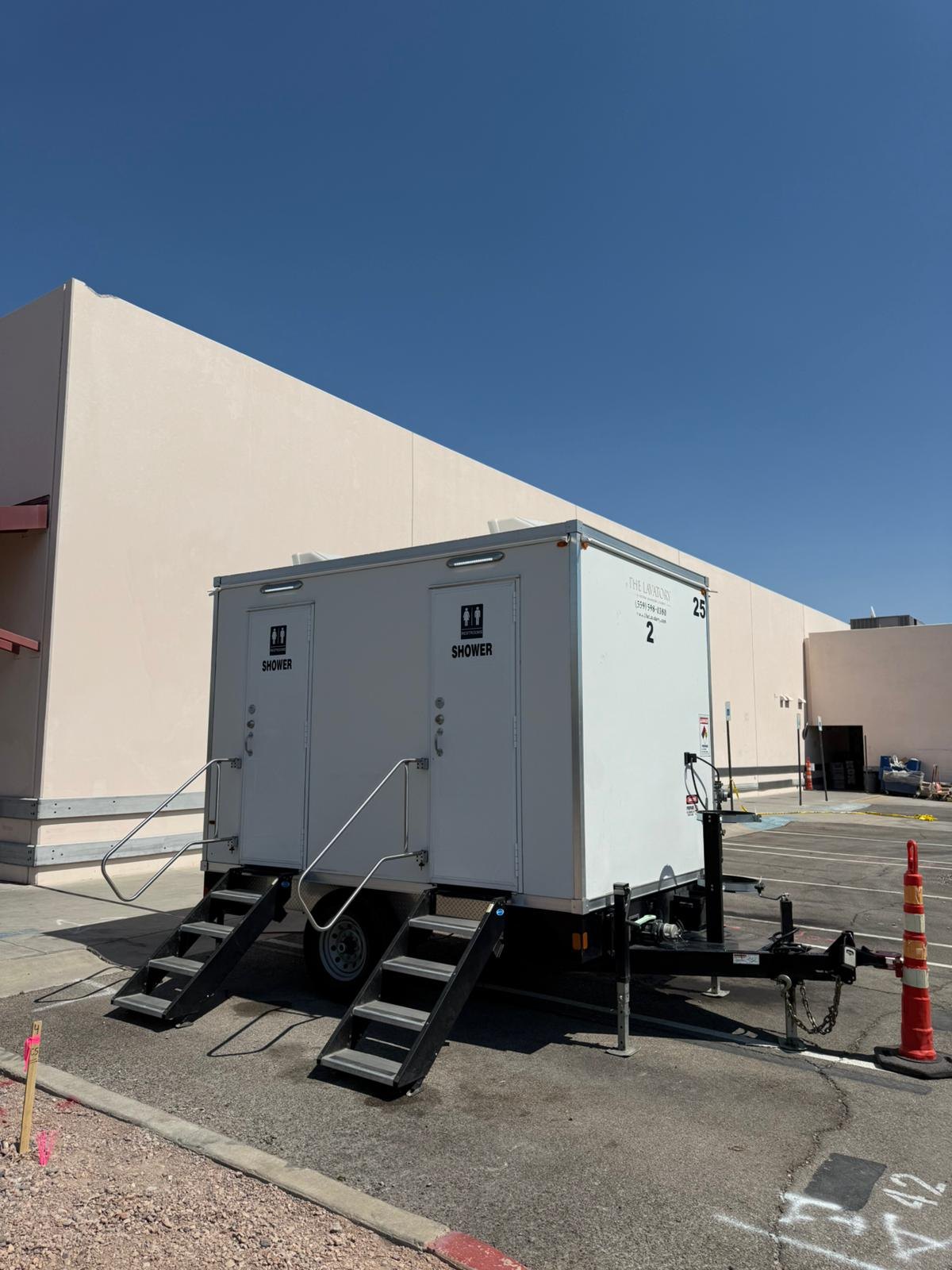
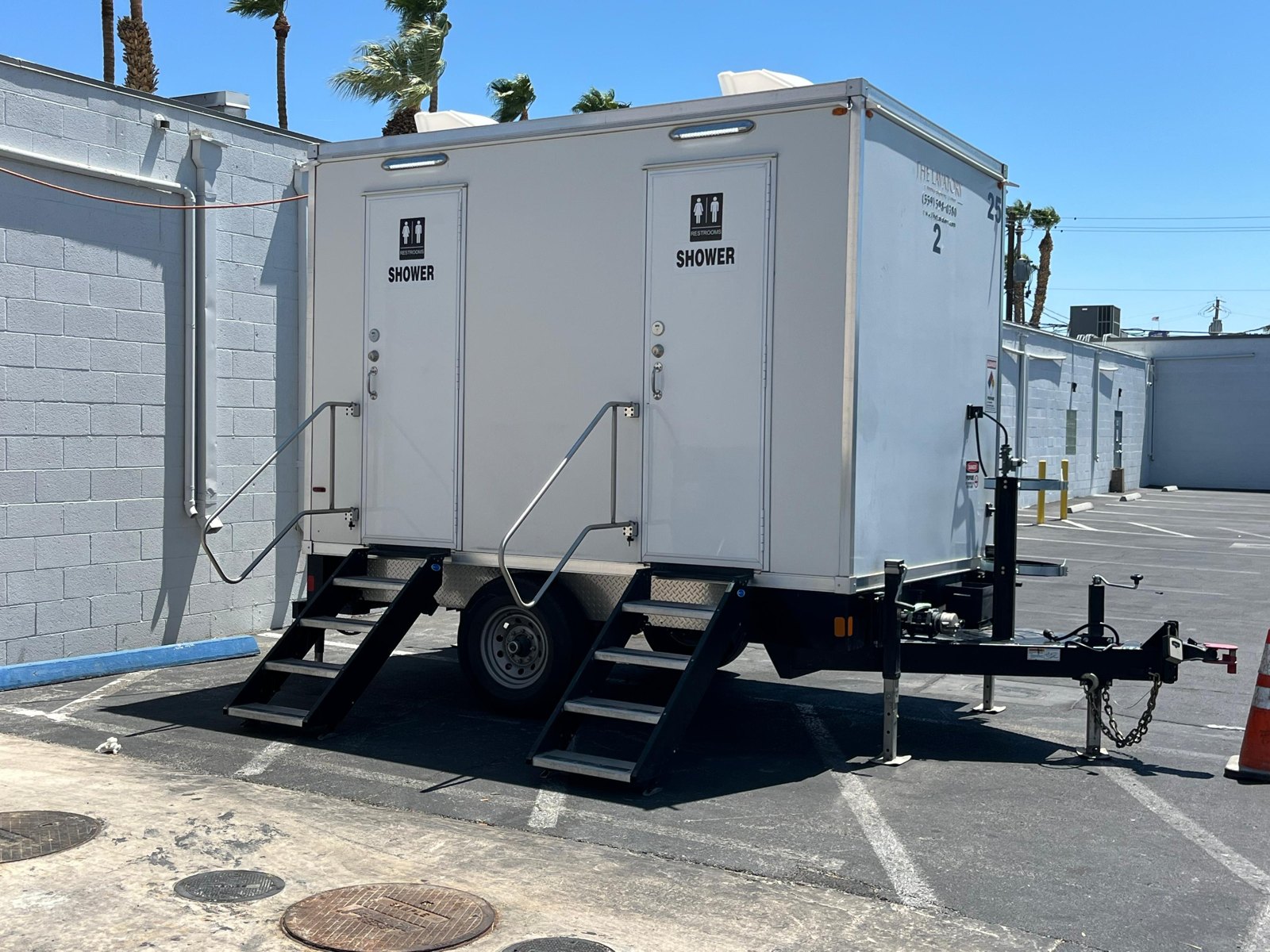
- Asphalt or concrete. Parking lots at schools, churches, venues, and commercial sites. Nothing to prepare, just confirm the slope is mild.
- Compacted gravel. The standard on job sites and laydown yards, and it drains well, which matters right at the door.
- Packed dirt or caliche. Workable in dry conditions across most of the state. It becomes a problem after rain and around the entry where foot traffic keeps things wet.
- Soft sand, loose playa, or fresh fill. These need matting and planning. Tell us in advance so we come prepared rather than discovering it with a truck already on site.
Access for the delivery and for every service visit after it
The truck has to get in, position the trailer, and get back out. Then it has to do that again on every fill and pump out for the length of the rental. The second part is what gets forgotten.
Things to check before you commit to a spot. Gate width and any height restriction, including tree limbs and low wires on residential and ranch properties. Turning room, since a tight cul de sac or a packed yard can make a spot that looks fine impossible to reach. Whether the approach crosses soft ground that will not hold a loaded truck. And whether the path stays clear as the project or event builds out around it, because a route that is wide open in week one is often blocked by material or fencing by week three.
Hookups versus self contained operation
This is the biggest branch in the planning conversation, and Nevada sites land on both sides of it constantly.
With hookups. If the site has a potable water source and power within reasonable reach, this is the simplest way to run. Typically that is an infill construction site in Las Vegas, Henderson, North Las Vegas, Sparks, or Carson City, a venue or fairground, or a shelter building's parking lot. You need a potable rated hose run protected where it crosses any traffic path, and a power source that is correctly sized and not shared with something likely to overload it.
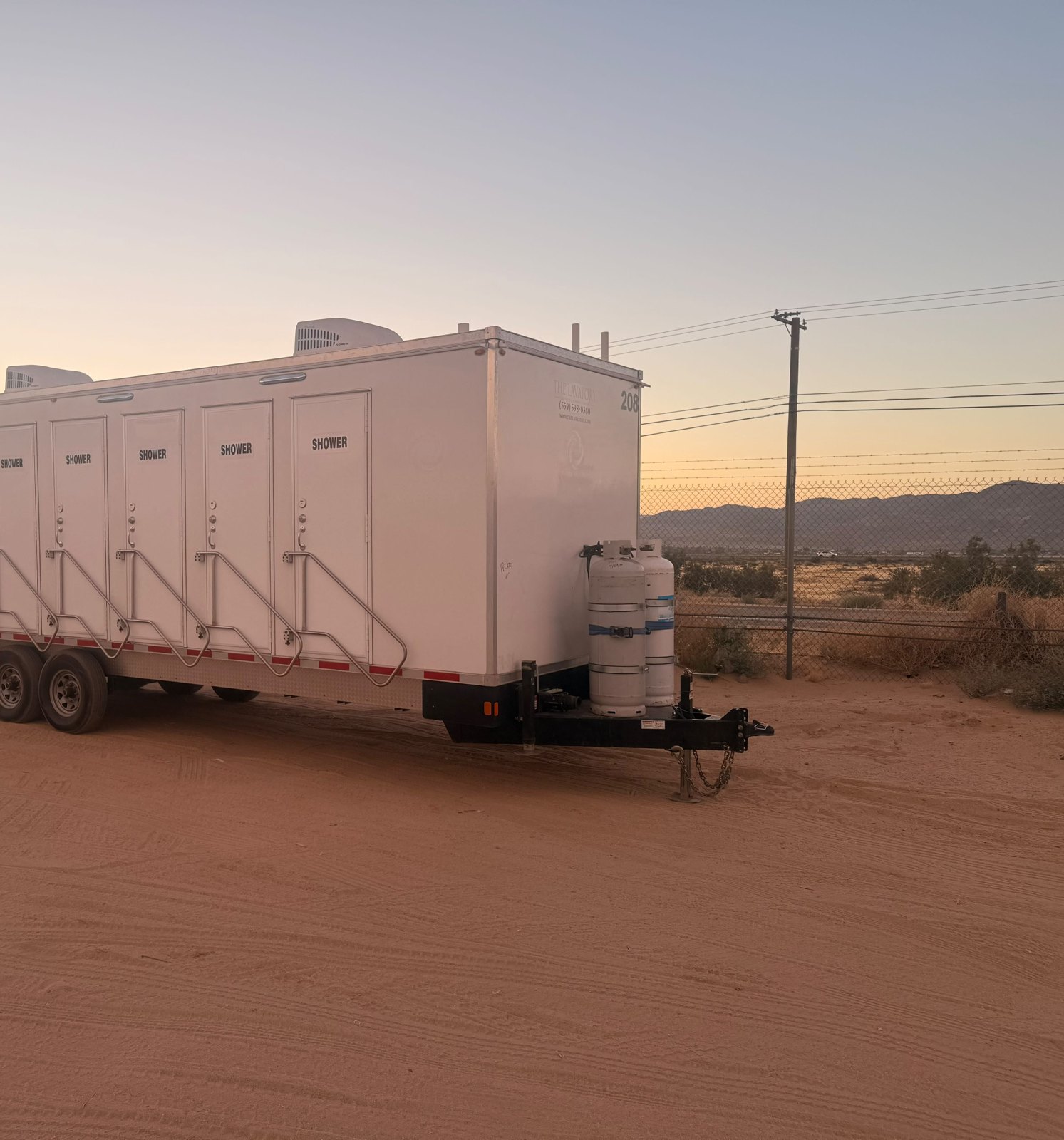
Self contained. Out on ranch land, mine sites, solar and transmission work, remote film locations, and open desert events, there is nothing to connect to. The unit runs on its own supply, gets filled on a rotation, and holds waste water for a licensed hauler to pump. This works well, and it works predictably, but it lives or dies on scheduling. Fills and pump outs have to be on a calendar, not on somebody noticing a problem.
Power planning specifics
The unit needs steady power for water heating, pumps, lighting, and climate control. In summer in the southern part of the state, climate control is working hard through the afternoon, and in winter in the north the heat is working hard overnight. Neither is the place to be running on a marginal supply.
Practical points. Size the generator for the trailer plus anything else you intend to run off it. Put someone's name on the fueling schedule. Place the generator far enough away that the noise does not carry into the stalls and with the exhaust directed away from the entry. If your site has quiet hours, or people sleeping nearby at a camp or a festival, plan the placement for that at the start rather than moving equipment later.
Waste water, drainage, and the area around the door
Gray water collects in a holding tank and gets pumped by a licensed hauler. Nothing discharges onto the ground, anywhere in this state, on any kind of property.
What you can control is the ground right outside the door. Foot traffic in and out of a shower is wet traffic, and wet traffic on bare dirt makes mud that walks straight back into the stalls. Gravel, a mat, or a small decked area at the entry solves it. A bench or a hook for boots and bags helps too, especially on a construction or mine site where people are coming out of heavy gear.
Cold weather protection in the north
Anyone renting in Reno, Sparks, Carson City, or Elko, or on a high elevation site anywhere in the state, needs a winter plan. Overnight freezing is normal there for months, and the shoulder seasons surprise people who mainly work the southern valleys.
Four things matter:
- Keep the unit powered overnight. Shutting everything down at the end of shift to save fuel is the single most common cause of a cold weather problem. The interior needs to stay conditioned.
- Protect the supply line. Any water line running outside the trailer is the vulnerable part. It needs to be protected and routed thoughtfully, and we will walk that with you at setup.
- Keep the approach safe. Water plus freezing temperatures plus a walking path equals ice. Sand or mats at the entry area are worth the small effort.
- Tell us at booking. A winter placement in Elko is a different setup conversation than a summer placement in Laughlin. The earlier we know, the better the setup.
Summer placement in the south
The opposite problem applies from late spring through early fall in Las Vegas, Boulder City, Mesquite, Laughlin, and Pahrump. Climate controlled interiors handle the heat, but placement makes their job easier or harder. If you have any choice, put the unit where it picks up afternoon shade from a building, a wall, a container stack, or trees. Keep it upwind of dust sources. And if people will be waiting outside, put shade over that area, because a queue in direct summer sun is miserable regardless of how nice the shower is at the end of it.
Accessibility
If your site serves the public, or if you have workers or guests who need accessible facilities, plan for it at the beginning. ADA options are available, and the requirement extends past the trailer itself to the approach. Firm, level surface, clear route, and adequate lighting are all part of it.
A short pre delivery checklist
- Spot chosen, reasonably level, on a firm surface.
- Delivery route confirmed, including gate width and overhead clearance.
- Service access path identified and protected for the length of the rental.
- Water source confirmed, or self contained operation and a fill rotation agreed.
- Power source confirmed and correctly sized, with fueling ownership assigned if using a generator.
- Pump out schedule set with a licensed hauler arranged through us.
- Entry area handled with gravel or matting so mud stays outside.
- Winter or summer plan discussed depending on the season and the region.
- Accessibility needs identified and the approach path checked.
- A site contact named who can be reached on delivery day.
Run that list and delivery day becomes uneventful, which is exactly what you want. We set units across Nevada, in the Las Vegas valley and Henderson and North Las Vegas, out to Boulder City, Mesquite, Laughlin, and Pahrump, and up through Carson City, Reno, Sparks, and Elko, along with all the remote sites in between. Send photos of the spot you have in mind with your inquiry and we will tell you honestly whether it will work before anyone gets in a truck.